
db Orlando Collision East is sharing consumer guidance to help Mazda owners understand how genuine replacement parts influence collision repair decisions following an accident. The November guidance addresses three practical considerations: identifying the correct replacement components, understanding Mazda-specific repair requirements, and reviewing parts selections during the insurance claim process. The information is intended to help Orlando-area drivers make informed decisions before authorizing collision repairs.
The guidance focuses on a common situation in which a vehicle owner receives an estimate listing replacement components without a clear explanation of the differences between available parts. Genuine Mazda parts, aftermarket components, and recycled original equipment may appear as separate options during repair planning. Understanding these categories can help consumers discuss compatibility, manufacturer requirements, and the reasons behind recommended repairs.
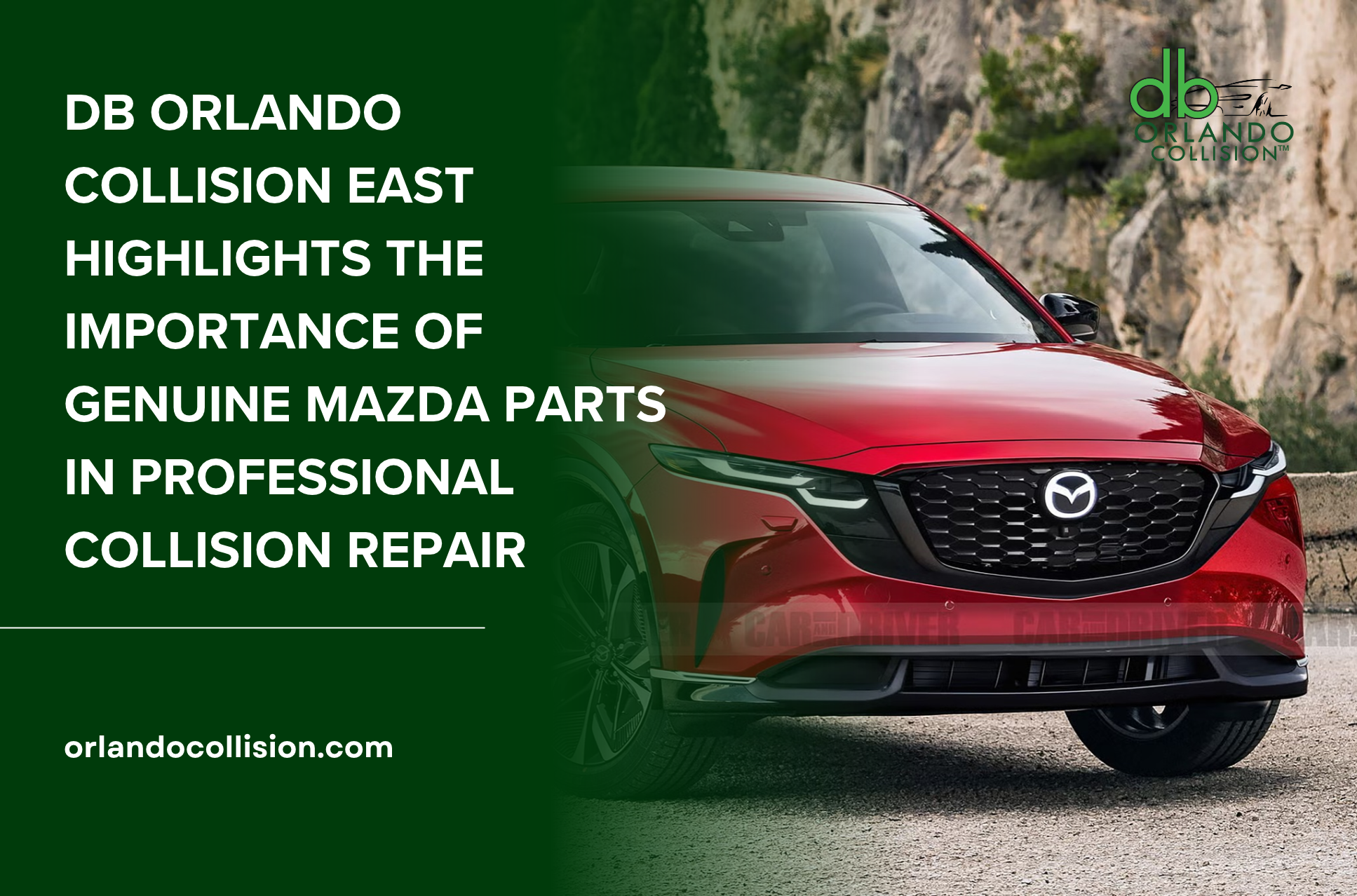
Genuine Mazda parts are manufactured to the specifications established for their intended vehicle applications. Depending on the component, these specifications may involve dimensions, construction materials, attachment points, and compatibility with surrounding vehicle systems. Selecting an appropriate replacement part is particularly important when collision damage involves structural components or equipment associated with vehicle safety features.
A front-end collision provides a practical example. Although visible damage may involve a bumper cover or fender, the impact can also affect reinforcement components, mounting brackets, or nearby electronic equipment. Technicians may need to inspect these areas before determining which replacement components and repair procedures are appropriate.
Mazda vehicles incorporate engineered body structures that may have specific requirements for repairing or replacing damaged sections. Depending on the model and affected components, manufacturer instructions may identify approved joining methods, repair limitations, and conditions requiring replacement rather than straightening or other repair operations. These requirements help establish the appropriate approach for the individual vehicle.
db Orlando Collision provides information about manufacturer-related repair qualifications through its Mazda certification information page. Mazda owners can use this resource as a starting point when discussing manufacturer-specific repair procedures and relevant qualifications with a repair facility. The applicability of individual certifications should be confirmed for the specific location and vehicle involved.
The November guidance also addresses the importance of evaluating replacement parts according to their intended function. A component that appears similar to the original part may differ in its materials, mounting arrangement, or other specifications. These differences can become relevant when a repair involves structural attachments, reinforcement areas, or electronic equipment.
Exterior body panels present another consideration. Replacement hoods, fenders, doors, and bumper components must be installed with attention to alignment, attachment points, and surrounding parts. Proper fitment is an important part of restoration, but exterior appearance alone does not establish that all related repair requirements have been satisfied.
db Orlando Collision East provides auto body repair services involving damaged exterior components and related vehicle restoration work. The facility's November guidance encourages Mazda owners to review replacement-part recommendations alongside the repair procedures applicable to their vehicle.
Electronic driver-assistance technologies can also influence parts selection. Depending on the model and equipment, Mazda vehicles may use cameras, radar sensors, and electronic modules supporting automatic emergency braking, adaptive cruise control, blind spot monitoring, and other functions. Some of these components are positioned near bumpers, windshields, or exterior body panels.
When collision repairs affect sensor locations or surrounding mounting components, manufacturer instructions may require additional inspections or diagnostic procedures. Certain operations may also require calibration to establish or verify specified sensor settings. These requirements depend on the vehicle and the repairs performed rather than applying automatically to every collision.
For Mazda owners, understanding these considerations can help explain why replacement-part decisions should not be based on price or appearance alone. A repair estimate should reflect the affected components, the applicable manufacturer procedures, and any additional operations necessary to complete the work.
Insurance estimates introduce another practical consideration. An initial estimate may identify aftermarket, recycled, or genuine OEM components based on available information and the terms of the insurance claim. However, additional inspection or disassembly may reveal damage requiring changes to the proposed parts or repair operations.
Genuine Mazda parts are not automatically covered under every insurance policy. Coverage can depend on policy provisions, claim circumstances, and other applicable requirements. Vehicle owners can review the proposed parts with their repair facility and insurance representative to understand which components are included in the estimate.
The guidance encourages Mazda owners to clarify three details before authorizing repairs: whether the estimate identifies genuine Mazda, aftermarket, or recycled components; whether the proposed parts and procedures satisfy applicable Mazda repair requirements; and whether additional inspections or electronic procedures will be necessary. These considerations provide a practical basis for reviewing replacement-part recommendations.
When a repair facility identifies a manufacturer requirement that differs from the initial estimate, supporting documentation can help explain the recommended change. Supplemental estimates may identify additional damaged components, replacement requirements, or procedures discovered during further inspection. Clear records can support communication among the vehicle owner, repair facility, and insurance representative.
The November guidance also emphasizes that selecting appropriate replacement parts is only one aspect of professional collision restoration. Damage assessment, correct installation methods, and final inspections remain important throughout the process. Depending on the repairs completed, verification may involve checking component fitment, exterior finish, structural measurements, or applicable electronic systems.
For Orlando-area Mazda owners, the central consideration is whether the selected parts and repair procedures are appropriate for the vehicle and the damage involved. Genuine Mazda components may be required or recommended in particular repair circumstances, while other decisions depend on the manufacturer's instructions and applicable requirements. Understanding these distinctions can help drivers review estimates without assuming that every replacement-part decision is identical.
Additional information about the facility and its services is available through the db Orlando Collision East location page. The November guidance provides Mazda owners with a practical framework for discussing replacement components, manufacturer repair procedures, and insurance estimates following an accident.
About db Orlando Collision East
db Orlando Collision East is an auto body and collision repair facility serving Orlando, Florida, and surrounding Central Florida communities. The location operates as part of db Orlando Collision, which provides collision repair, auto body restoration, and manufacturer-focused vehicle repair services. The organization publishes information about manufacturer-specific repair qualifications, damage assessment, and the collision repair process.
###
For more information about db Orlando Collision - East, contact the company here:
db Orlando Collision - East
Drew
407-467-5930
Drew@orlandocollision.com
2591 N Forsyth Rd unit d, Orlando, FL 32807, United States