
Collision Care Xpress is publishing a consumer guide explaining the essential elements of safe and complete auto body repairs following a vehicle accident. The November publication outlines how manufacturer repair procedures, structural evaluations, electronic safety systems, and final quality inspections contribute to the collision repair process.
The guidance addresses why restoring a vehicle's appearance does not necessarily mean every accident-related repair requirement has been completed. While paint quality and panel alignment are visible indicators of repair work, additional inspections and technical procedures may be necessary depending on the vehicle and collision damage.
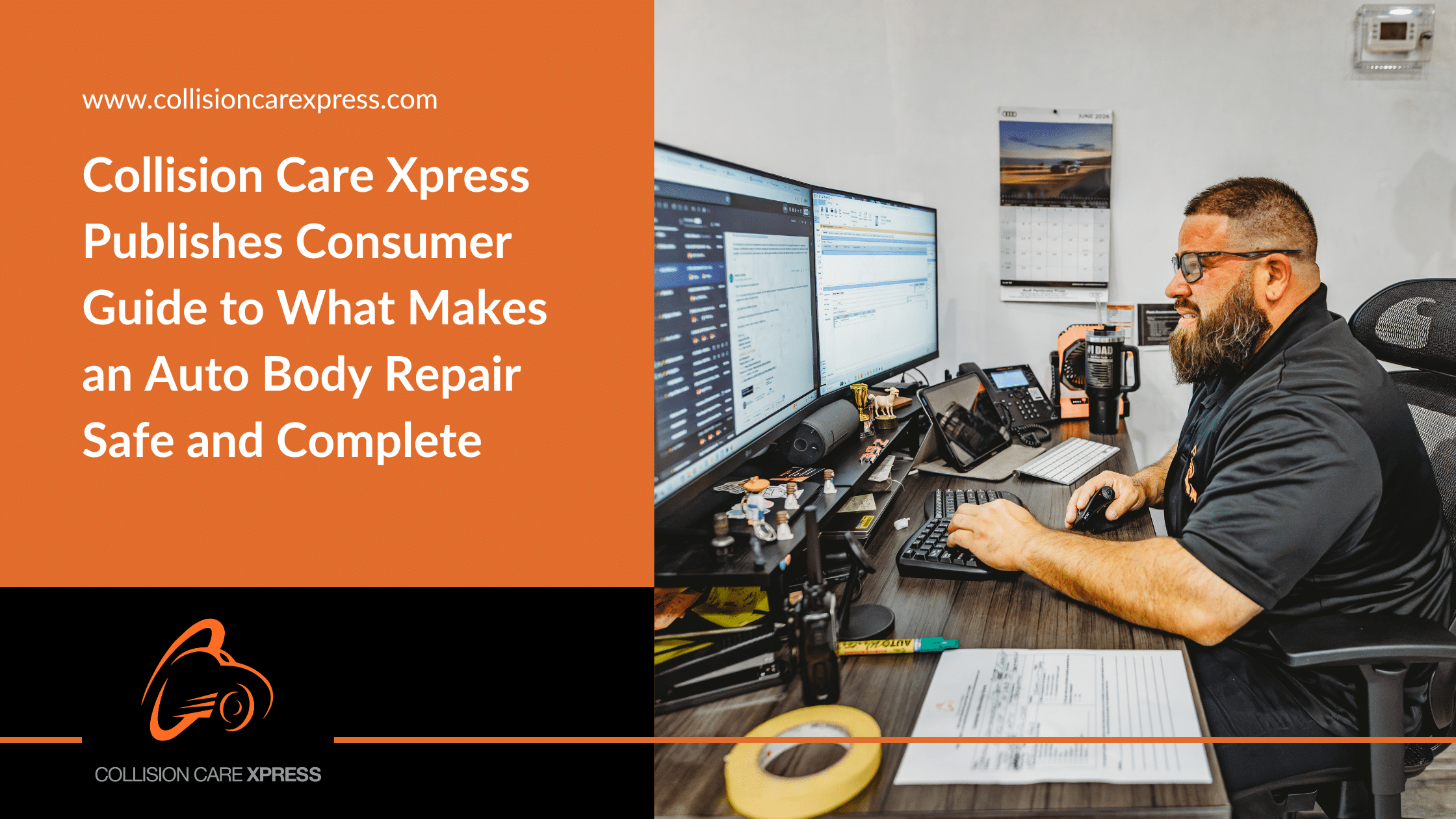
Collision Care Xpress provides auto body repair services for drivers in Daytona Beach and surrounding Volusia County communities. The company developed the guidance to help vehicle owners better understand repair requirements and the information they can request before accepting a repaired vehicle.
According to the publication, a complete repair begins with an accurate assessment of collision damage. Technicians evaluate visible conditions while identifying areas that may require further inspection or disassembly to determine whether underlying components have been affected.
Damage beneath exterior panels can involve mounting points, reinforcements, structural components, and related vehicle systems. When these areas cannot be adequately assessed visually, additional inspection may be necessary before a repair plan is finalized.
The guidance emphasizes that manufacturer repair procedures are an important reference when determining appropriate restoration methods. Modern vehicles incorporate different grades of steel, aluminum, plastics, and composite materials, each potentially requiring specific repair or replacement techniques.
Vehicle manufacturers may specify approved joining methods, structural measurements, component replacement restrictions, and installation procedures. These requirements vary by model and production year, making vehicle-specific repair information essential when evaluating collision damage.
Through its collision repair services, Collision Care Xpress addresses accident-related damage involving exterior components and underlying vehicle structures. The company emphasizes evaluating repair requirements according to the vehicle's construction rather than relying exclusively on its outward appearance.
Structural integrity is another subject addressed in the November guide. Certain vehicle components are engineered to manage collision forces and maintain the positioning of surrounding systems. When an accident affects these areas, technicians may need to perform measurements and manufacturer-directed inspections.
The publication also explains why correct component installation matters. Repair procedures may specify particular fasteners, adhesives, attachment methods, and replacement requirements. Following these instructions is an important part of completing work according to applicable manufacturer specifications.
Paint and refinishing procedures are included among the guide's repair quality considerations. Surface preparation, corrosion protection, coating application, and finish consistency can affect the appearance and durability of repaired areas.
However, the publication notes that an acceptable exterior finish does not independently verify the condition of structural or electronic systems affected during an accident.
Modern vehicles frequently incorporate advanced driver assistance systems, commonly known as ADAS. Depending on the vehicle, these systems may support automatic emergency braking, lane assistance, adaptive cruise control, and other driver-support functions.
Cameras, radar sensors, and related electronic components may require inspection or calibration following certain collisions or repair operations. The procedures required depend on the vehicle's equipment, manufacturer instructions, and completed repairs.
Collision Care Xpress provides information about these requirements through its ADAS repair services. The consumer guide explains that diagnostic scanning and calibration serve different purposes and that completing one procedure does not necessarily satisfy the requirements of the other.
The absence of dashboard warning lights also does not independently establish that all manufacturer-required procedures have been completed. Applicable repair information must be reviewed to determine whether additional diagnostic or calibration work is necessary.
Final quality inspections represent another important stage of collision repair. Depending on the work performed, technicians may examine panel alignment, exterior lighting, refinished surfaces, repaired components, diagnostic findings, and applicable calibration records.
The guide encourages consumers to ask repair facilities how manufacturer procedures were identified, whether hidden damage was inspected, and which quality-control checks were completed. Vehicle owners may also request information about structural measurements, diagnostic scanning, and calibration when those procedures apply.
Repair documentation can provide additional context through estimates, supplemental records, final invoices, and relevant inspection reports. These documents help establish which operations were performed, although paperwork alone cannot guarantee a vehicle's present condition or future safety performance.
Collision Care Xpress states that repair completeness must be assessed according to the specific vehicle and damage involved. A minor exterior repair may require different procedures from a collision affecting structural components or electronic safety equipment.
The November consumer guide is intended to help Daytona Beach drivers understand why safe and complete auto body repairs involve more than cosmetic restoration. Appropriate damage assessment, manufacturer-directed procedures, and final verification remain central considerations throughout the repair process.
Collision Care Xpress serves vehicle owners in Daytona Beach, Florida, and surrounding Volusia County communities, providing collision repair, auto body repair, and ADAS-related services. The company emphasizes damage evaluation, applicable manufacturer requirements, and communication throughout the vehicle restoration process.
###
For more information about Collision Care Xpress - Daytona Beach, contact the company here:
Collision Care Xpress - Daytona Beach
Robert Molina
386-267-0904
dbservice@collisioncarexpress.com
418 N Segrave St, Daytona Beach, FL 32114